Hume AI is building the data and evaluation layer for emotionally intelligent voice AI.
Our Vision
We envision a future where voice AI enhances human connection because it can be measured, improved, and aligned with how people actually experience conversation.
Today's AI systems are remarkably capable at processing language and generating responses, but most still miss the emotional, vocal, and contextual expressions that shape trust in real interactions.
We're changing that. Built from a decade of voice and emotion research, Hume provides the research infrastructure behind expressive, trustworthy voice AI: scientifically grounded datasets, speech models, evaluation frameworks, and human preference pipelines.
Whether you're building foundation models, fine-tuning voice agents, or evaluating production systems, Hume helps teams measure and improve voice AI the way people experience it.
Our Academic Origins
A history of emotion science
We're continuing the legacy of emotion science and bringing it into the next era with AI.
Hume argues that emotions drive choice and well-being
At Hume AI, we take this as a guiding principle behind ethical AI: in order to serve our preferences, algorithms should be guided by our emotions.
Recognizing the need to map out the emotions that animate thought and action, Hume also proposed a taxonomy of over 16 emotional states, but lacked scientific evidence.
Darwin surveys human emotion
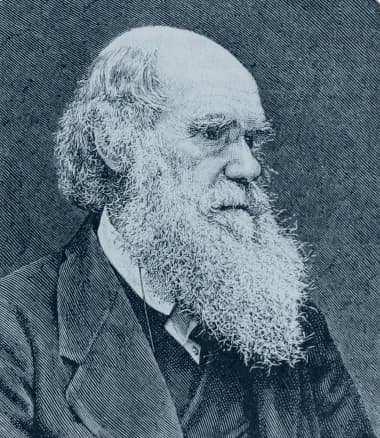
Charles Darwin described similarities and differences in over 20 facial, bodily, and vocal expressions across species, cultures, and stages of life. The Expression of the Emotions in Man and Animals was his third major work.
He lacked statistical methods to test his hypotheses about human emotion. But 150 years later, studies are confirming many of Darwin's observations.
Ekman documents six facial expressions
Paul Ekman traveled the world to find that six expressions are universally recognized. By focusing on a narrow set of behaviors, Ekman was able to use the statistical methods available to him to confirm some of Darwin's ideas.
However, the focus on just six emotions also introduced what we call the 30% problem: the focus of scientists for 50 years on only 30% of the full range of emotions people experience.
Scientists try to reduce human emotion
While many scientists focus on six emotions, others attempt to derive taxonomy of emotion from data. However, due to statistical limitations, these results lead to even more reductive theories of emotion.
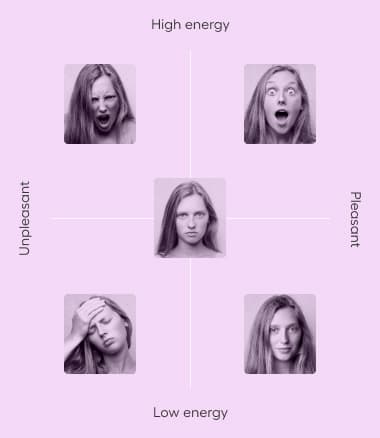
Some scientists endorse "core affect": the notion that emotions are largely captured by how pleasant or unpleasant and calm or aroused an experience or expression seems.
The full spectrum of emotion in voice AI
Hume's scientists use data-driven methods, computational techniques, and large-scale human studies to understand how people express and perceive emotion across voice, face, and language.
That research now powers infrastructure for voice AI: multilingual datasets, speech models, human-grounded evaluations, public benchmarks, and feedback systems that help teams understand whether models sound natural, reliable, emotionally aware, and appropriate.
Hume argues that emotions drive choice and well-being
At Hume AI, we take this as a guiding principle behind ethical AI: in order to serve our preferences, algorithms should be guided by our emotions.
Recognizing the need to map out the emotions that animate thought and action, Hume also proposed a taxonomy of over 16 emotional states, but lacked scientific evidence.
Darwin surveys human emotion
Charles Darwin described similarities and differences in over 20 facial, bodily, and vocal expressions across species, cultures, and stages of life. The Expression of the Emotions in Man and Animals was his third major work.
He lacked statistical methods to test his hypotheses about human emotion. But 150 years later, studies are confirming many of Darwin's observations.
Ekman documents six facial expressions
Paul Ekman traveled the world to find that six expressions are universally recognized. By focusing on a narrow set of behaviors, Ekman was able to use the statistical methods available to him to confirm some of Darwin's ideas.
However, the focus on just six emotions also introduced what we call the 30% problem: the focus of scientists for 50 years on only 30% of the full range of emotions people experience.
Scientists try to reduce human emotion
While many scientists focus on six emotions, others attempt to derive taxonomy of emotion from data. However, due to statistical limitations, these results lead to even more reductive theories of emotion.
Some scientists endorse "core affect": the notion that emotions are largely captured by how pleasant or unpleasant and calm or aroused an experience or expression seems.
The full spectrum of emotion in voice AI
Hume's scientists use data-driven methods, computational techniques, and large-scale human studies to understand how people express and perceive emotion across voice, face, and language.
That research now powers infrastructure for voice AI: multilingual datasets, speech models, human-grounded evaluations, public benchmarks, and feedback systems that help teams understand whether models sound natural, reliable, emotionally aware, and appropriate.



Join our mission
We're always looking for talented people who share our vision of building AI that truly understands humanity.